What prevents readers from trusting the conclusion
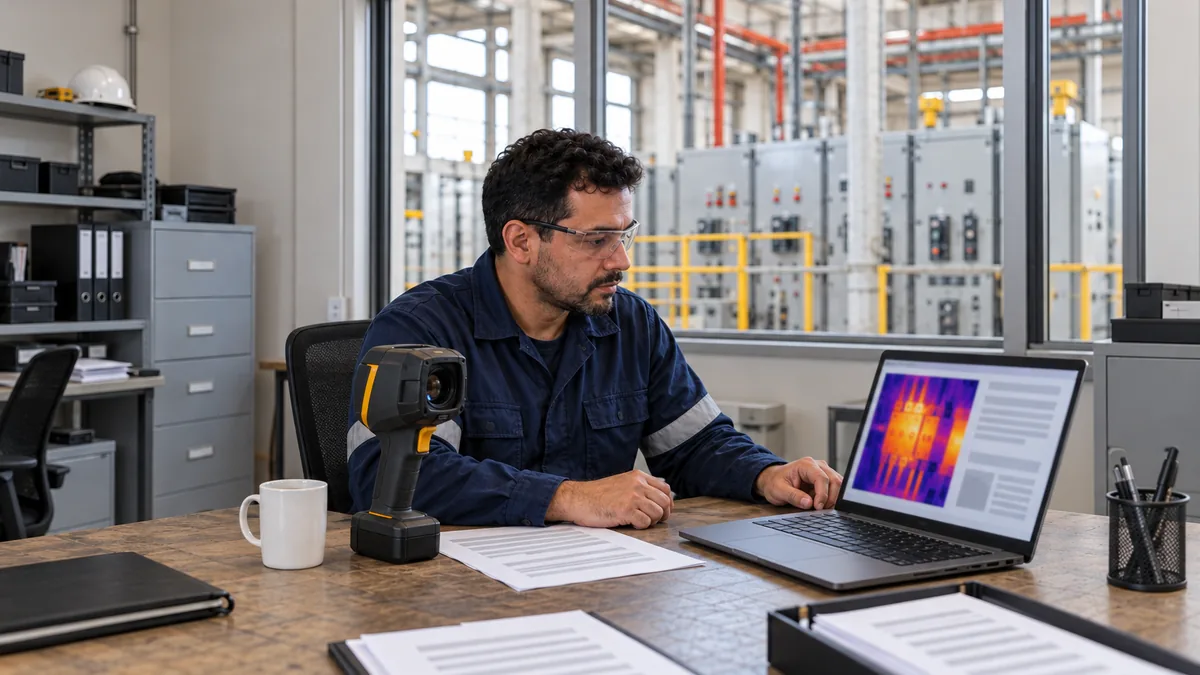
A thermography report loses value when only its author can explain the reasoning behind it. The thermogram may be clear, the equipment correctly identified and the layout consistent, yet information may still be missing for someone to reproduce the analysis, audit the rating or make a maintenance decision. The weakness becomes apparent when a reviewer asks where a setting came from, what operating condition was observed or what should happen next.
The five errors below break the connection between evidence and decisions. This article examines technical gaps in the document. Earlier blog articles covered route planning, the workflow from image to PDF and comparisons between reporting methods. The question here is whether another person can understand and check a conclusion without speaking to the person who performed the inspection.
The wording examples are teaching aids without measurement values. References to records and attachments assume that those documents actually exist and are clearly identified. A real report must contain the acquired data. Directing readers to an empty attachment simply moves the gap elsewhere.
Error 1: leaving out emissivity and reflected apparent temperature
Reporting a temperature without the settings used prevents a reviewer from reconstructing the analysis. Adopted emissivity and reflected apparent temperature affect the interpretation of radiometric data. When they are missing, readers cannot tell whether the assessment considered the observed surface and reflected radiation or simply retained settings from a previous camera session.
Record the emissivity actually used, the surface it applies to and the basis for choosing it: an identified procedure, a reference appropriate to the surface condition or a documented determination. For reflected apparent temperature, record both the adopted value and how it was obtained. It is not automatically equivalent to ambient air temperature. Identify estimates and explain their limitations.
ABNT NBR 15572:2013 provides guidance for thermographic inspection of electrical and mechanical equipment. ABNT NBR documents are Brazilian standards; outside Brazil, follow the criteria adopted in the contract and the relevant country. Naming a standard does not explain how a particular image setting was selected.
Wording example
Weak wording: "Temperature assessed using the camera's default settings."
Adequate wording: "Emissivity was determined by comparison measurement under the procedure identified in the point record. Reflected apparent temperature was determined in the field using the method described in that record. Adopted values, the assessed surface and determination records accompany the analyzed image. Ambient air temperature is recorded separately."
Check that the record belongs to the analyzed image and that later adjustments are documented. Keeping the original radiometric file supports reanalysis; retaining the settings used in the issued version explains the conclusion that was delivered.
Error 2: presenting a thermogram without its corresponding visual image
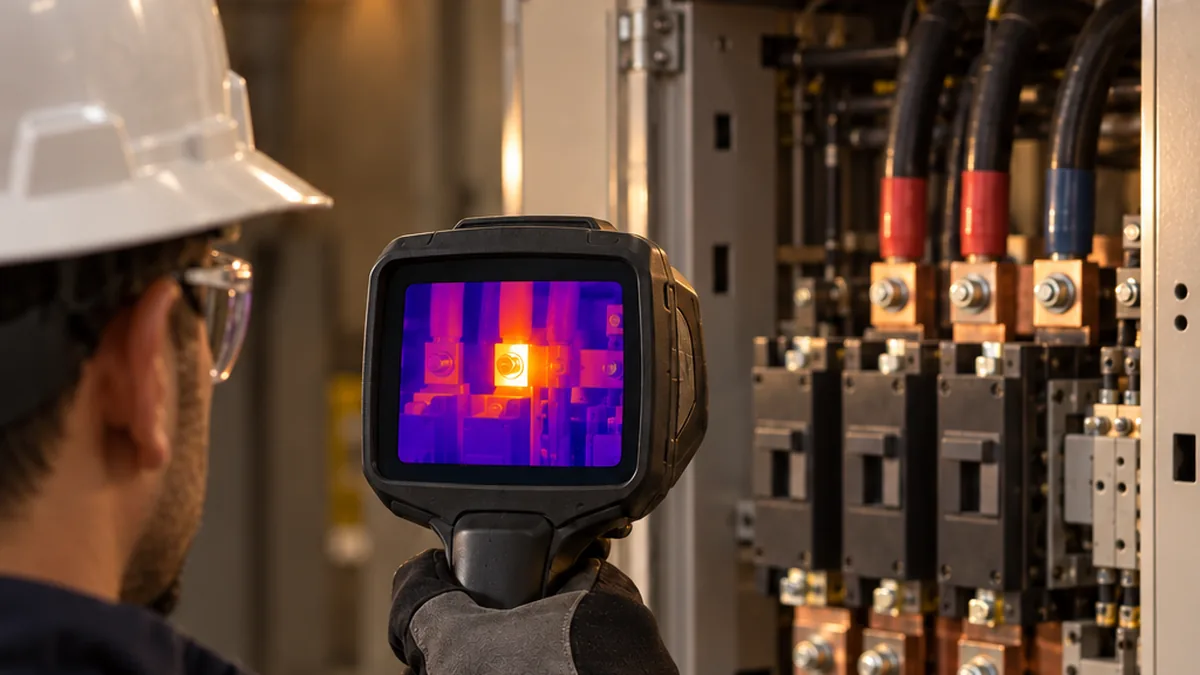
A thermogram can show heating clearly while leaving the reader unsure which connection needs attention. Nearby or similar components are difficult to locate for someone who was not present. Without the corresponding visual image, readers lose evidence they could use to check whether the indicated point belongs to the described equipment.
Attach a visual image of the same inspection point and maintain a common identifier across photograph, thermogram and finding. The view should make the component's position within the assembly recognizable. An excessively wide photograph or an image from another visit may still leave the association uncertain. Check that it remains readable in the delivered document.
Wording example
Weak wording: "Heating in the panel, as shown in the thermal image."
Adequate wording: "The thermogram and visual photograph associated with this finding show the connection in the circuit and position described in the equipment record. The photograph locates the point within the assembly; both images carry the finding identifier."
Words cannot replace the photograph. Check that the files, asset identification and component actually match. If no visual image was obtained, state the omission and its effect on locating the point. A similar photograph does not repair the gap. Any additional image capture must follow the facility's authorized procedures and safety arrangements.
Error 3: failing to record the load condition
"Equipment running" does not establish the condition observed. Heating depends on load current, and a survey during reduced demand may not represent the state that maintenance needs to assess. Without this context, readers cannot judge whether the comparison is appropriate or interpret differences from an earlier visit.
Record the load condition at the time of inspection and identify the information source. This might be measured current, an available instrument reading or a percentage load reported by operations, with the basis for that percentage. Distinguish measurements, reported information and estimates. Associate the record with the correct capture time, circuit and equipment.
Wording example
Weak wording: "Equipment operating normally during inspection."
Adequate wording: "Operations supplied the load condition, recorded against the image capture with its source and calculation basis identified. Current was not independently measured during this inspection. Interpretation of the finding takes that limitation into account."
Use this example when operations provided the information. If a measurement was taken, document its method and supporting record instead. If load information is unavailable, say so and explain which conclusions it cannot support. An impression of normal operation is not evidence of load. Where that gap prevents a sufficient assessment, recommend reinspection under an identified, representative operating condition, as determined by the responsible professional.
Error 4: rating severity without criteria, a source or a ΔT reference
A phrase such as "high severity" sounds decisive but cannot be audited when the criteria are missing. A temperature difference can also be misinterpreted if its reference is unclear. Readers need to know which rule governed the rating and which observations were compared.
State the contractual severity criteria or adopted standard, including its identification and applicable edition. For example, ANSI/NETA MTS includes Table 100.18, which suggests actions for thermographic surveys based on temperature rise. When using it, record the edition consulted and the comparison basis: similar components under similar loading, or a component compared with ambient air. Those bases are not interchangeable.
Identify the anomalous point, the reference used for ΔT and why that reference is appropriate. The actual report should present the corresponding temperature readings and their difference. This article does not reproduce numerical bands, limits or temperature differences. A color or rating abbreviation cannot replace the reasoning behind the assessment.
Wording example
Weak wording: "Elevated ΔT, critical condition according to the standard."
Adequate wording: "The rating follows the contractual criteria identified in the assessment record, with their revision documented. ΔT compares the assessed connection with the identified reference component, which has a similar function and similar loading. The record contains the readings and the justification for that comparison."
If the source is a standard, identify the standard and edition in place of the contractual reference in this example. If the contract modifies a criterion, document the modification. Do not present the facility's maintenance priority as though it were a rating taken directly from a table.
Error 5: ending with a vague recommendation
"Check", "monitor" and "correct when possible" leave the decision unfinished. A maintenance manager needs to know which component to refer, who should investigate the hypothesis, what priority applies and how the effectiveness of an intervention will be verified. Even a sound rating loses practical value without an actionable recommendation.
Describe what should be investigated or corrected, who will verify it, the proposed priority and its justification. Connect the recommendation to the available evidence and its limitations. Localized heating may justify investigating a connection's condition, but the image alone does not confirm insufficient tightening or oxidation. Keep a suspected cause separate from a verified cause.
Wording example
Weak wording: "Maintenance on the connection is recommended."
Adequate wording: "Refer the identified connection to the electrical maintenance team to investigate contact resistance and check its physical condition under the facility's authorized procedure. Prioritize the assessment using the rating justified in the finding record and the asset's criticality. The maintenance lead should document the verification and agreed intervention. After intervention, perform a reinspection under a comparable load condition documented by the thermographer."
Scheduling depends on the facility's assessment and safety procedures. This example does not authorize work on energized parts. Establish who receives the outstanding action and who verifies its closure. A record that work was completed does not, on its own, demonstrate that the thermal condition was resolved. Reinspection needs comparable evidence and operating context to support that conclusion.
Final review checklist
- Emissivity and reflected apparent temperature have documented values, sources and methods.
- The thermogram and visual image match the same identified point.
- Load, image capture time and the information source are linked.
- Criteria, source, edition or revision and the ΔT reference are explicit.
- The recommendation states the action, justified priority, verification responsibility and reinspection.
- Referenced attachments exist, are identifiable and allow the conclusion to be checked.
Where ThermalReports fits
ThermalReports runs in the browser and supports importing radiometric images and JPEG files from cameras made by different manufacturers, preserving metadata and palettes. It offers assisted anomaly classification with recorded criteria, links inspection points to equipment and standards, and produces standardized PDFs with branding, images and a findings table. Equipment QR codes provide inspection history. The thermographer reviews the assessment and retains technical responsibility. Check compatibility with files from your own camera fleet.
A conclusion others can verify
During final review, read each finding as someone receiving the task without having attended the inspection. Does the information allow that person to locate the point, check the assessment and arrange an action? Wherever an answer depends on the author's memory, complete the record or state the limitation before issue.
Explore ThermalReports at thermalreports.com and assess its features for organizing evidence and presenting thermography reports with technical context that others can verify.